
The infrastructure industry continues to look for ways to encourage and inspire young people to enter the profession. Understanding infrastructure begins in classrooms, labs, and studios — where future engineers first learn how to think about systems, constraints, and the long-term consequences of design decisions. At Bentley Systems’ 2025 Year in Infrastructure Conference, that idea took center stage with the presentation of the company’s inaugural Educator of the Year Award.
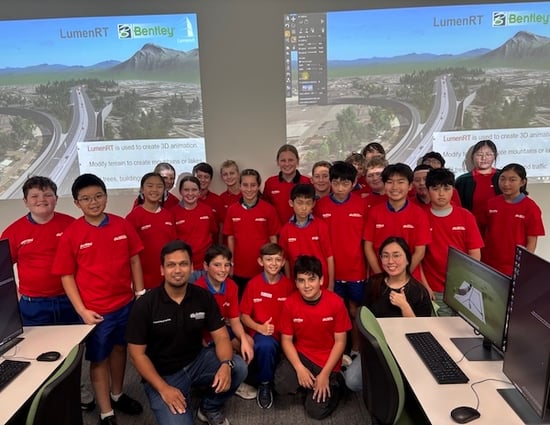
Bentley’s inaugural Educator of the Year was developed to highlight an excellent educator and to help build collaboration among educators. Image source Irfaan Peerun.
What You’ll Learn
|
The award recognizes an academic professional who has made a meaningful impact on infrastructure education through innovative teaching, strong student engagement, and the thoughtful integration of modern engineering technologies into the curriculum. This year’s recipient, Dr. Irfaan Peerun, is a lecturer in civil engineering at Griffith University in Australia. He teaches undergraduate and postgraduate students while supervising doctoral research in digital engineering.
Trained as a civil and geotechnical engineer and educated across multiple countries before settling in Australia, Peerun brings a global perspective to the classroom. His work connects digital engineering concepts directly to real-world challenges — ranging from construction sequencing and sustainability analysis to campus-scale digital twins and hands-on community outreach.
Rather than focusing solely on software proficiency, Peerun’s teaching emphasizes critical thinking and interdisciplinary collaboration, with an emphasis on understanding how infrastructure decisions affect people, operations, and the built environment over time. That broader educational perspective made him a strong choice as the award’s first honoree.
Why Bentley Created the Educator of the Year Award
According to Chris Bradshaw, Bentley’s head of Sustainability and Education, the Educator of the Year Award was created to spotlight a group that often works behind the scenes: educators shaping how infrastructure professionals are trained long before they enter the workforce.
Modeled after Bentley’s long-running Going Digital Awards, the program invited nominations and self-submissions from across the education spectrum — from K–12 to post-secondary institutions. Submissions were evaluated against five weighted criteria, including: Impact on Students; Innovation in Education; Broader Educational Leadership & Advocacy; Integration of Infrastructure Technology in Teaching; and Sustainability & Social Impact, and reviewed by a panel of independent judges from academia, rather than Bentley staff.
“We wanted a process that felt familiar to the academic community,” Bradshaw explained, “with clear criteria, external review, and an emphasis on educational impact rather than product expertise.”
The response was broader than expected. While most submissions came from university professors, the pool also included high school teachers and a middle school educator — reinforcing the idea that innovation in infrastructure education can happen at many levels.
As Bentley expands the award program, the aim is to recognize individual excellence and to encourage the sharing of ideas among educators — particularly those experimenting with new ways to teach complex infrastructure concepts in a rapidly evolving technological landscape.
For Bentley, the award reflects a growing recognition that addressing workforce shortages, sustainability goals, and digital transformation in infrastructure must start with how — and what — students are taught.
Transforming Engineering Education with Digital Tools
Hands-on learning. Peerun structures his courses around hands-on problem solving, with students learning through modeling, simulation, and open-ended design challenges rather than step-by-step instruction. This approach is central to his interdisciplinary Digital and Spatial Technologies course, where students from civil, environmental, and construction management programs work directly with infrastructure models. Assignments are framed around outcomes such as modeling roads, bridges, and buildings; sequencing construction activities; and communicating design intent visually to nontechnical audiences. As students advance, they are given increasing freedom to modify designs as teams, testing how changes affect time, cost, and sustainability. The emphasis is not on mastering a single piece of software, but on understanding how digital tools support engineering judgment and collaboration.
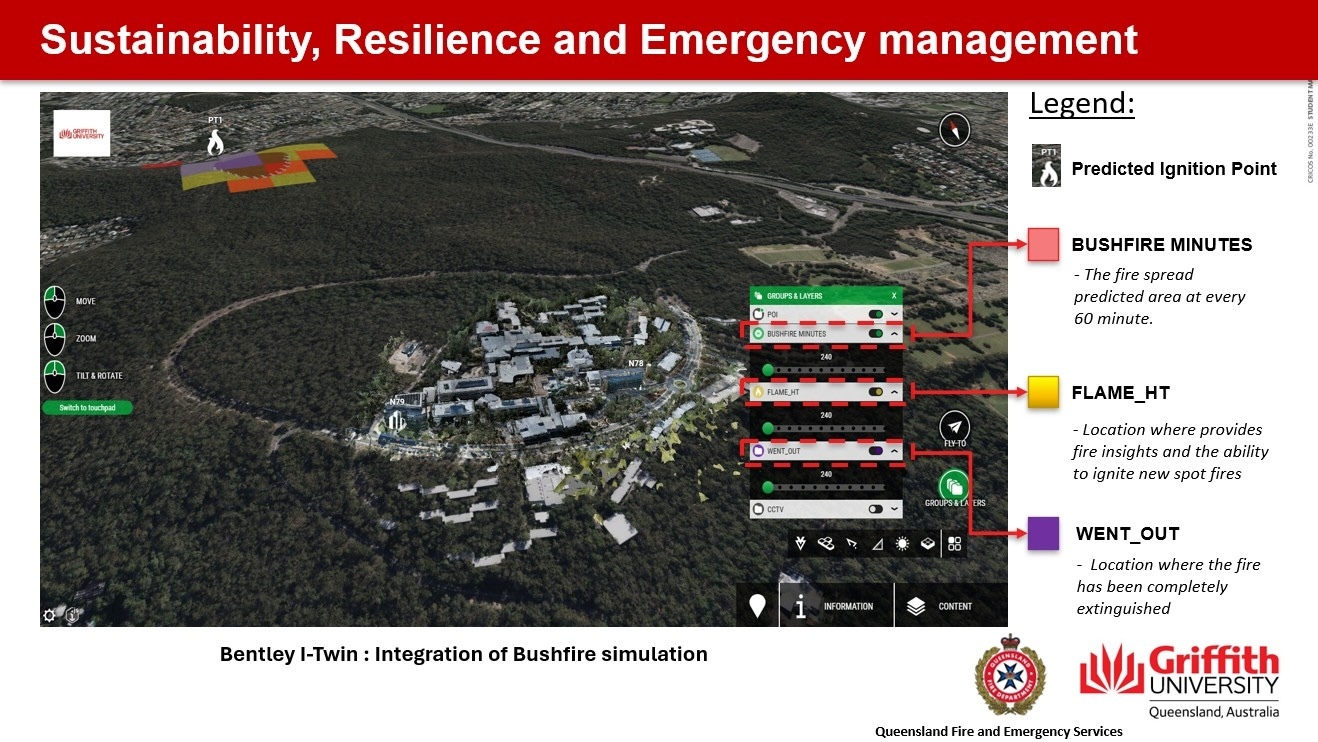
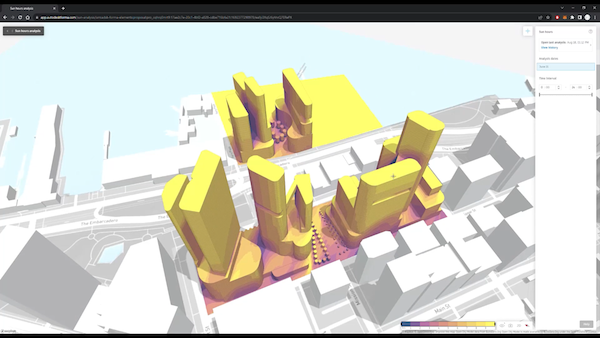
Griffith university students built a full digital twin of the university and in one project predicted potential fire dangers. Image source Irfaan Peerun. Click image to enlarge.
Digital twins. That philosophy extends into Peerun’s research-led teaching, where students help develop and expand a campus-scale digital twin of Griffith University built on Bentley’s iTwin platform. Using drone imagery and existing building models, students create a shared digital environment that brings together structural and geospatial data with operational information. The iTwin platform allows these disparate data sources to coexist in a single, accessible model, giving students practical exposure to how digital twins are used beyond design, including facilities management, asset tracking, and emergency planning. By working with live data rather than static examples, students gain insight into how infrastructure systems interact and evolve over time.
The digital twin also provides a framework for more advanced, real-world scenarios. Peerun’s students layer in live CCTV feeds, sensor data, and bushfire spread simulations developed in collaboration with emergency services, turning the model into an operational decision-support tool. These projects expose students to the complexity of managing infrastructure at scale and demonstrate how platforms like iTwin support interoperability to bring together models, GIS data, and external simulation outputs regardless of their source.
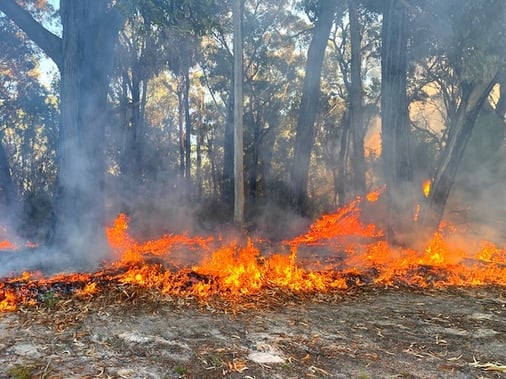
Using digital twin data, Peerun’s students run bushfire simulations of the land around the university, working in collaboration with the school’s facilities managers. Image source Binikins/stock.adobe.com.
Infrastructure for kids. Peerun’s commitment to experiential learning also reaches well beyond the university. Through outreach programs aimed at primary and secondary school students, he introduces younger learners to infrastructure concepts using familiar entry points such as gaming, animation, and virtual reality. Programs like From Minecraft to Reality invite students as young as 10 to model local roads and bridges, visualize them in immersive environments, and begin thinking about how infrastructure shapes communities. Supported by state STEM grants, Peerun has taken similar workshops to regional areas, helping students explore resilience, flooding, and climate adaptation through simplified but authentic engineering scenarios. Across all these efforts, the design principle remains consistent: meet learners where they are, give them meaningful tools, and let hands-on experience spark curiosity about the built environment. Peerun’s outreach reflects a broader belief that early exposure can encourage kids to become engineers and designers.
The Future of Infrastructure Education
As infrastructure projects become more complex and interconnected, educators are being asked to prepare students not just to design components, but to understand how those components perform over time, interact with other systems, and affect communities.
From Bentley’s education team’s perspective, that shift requires new kinds of educational resources. Bradshaw points to the company’s growing focus on concept-based learning modules developed in collaboration with educators themselves. The emphasis is on supporting teaching that aligns with how instructors already think about curriculum — whether that means construction sequencing, sustainability analysis, or operational decision-making. Programs like Peerun’s demonstrate how digital platforms can support that approach by giving students access to realistic, multidisciplinary environments that mirror professional practice.
Just as important is the ripple effect. When educators share curricula, methods, and examples — as Peerun has done — those ideas spread quickly. Other universities see what’s possible, adapt it to their own needs, and build from there. In that sense, The Educator of the Year Award is intended to highlight models that can be shared across the academic community.
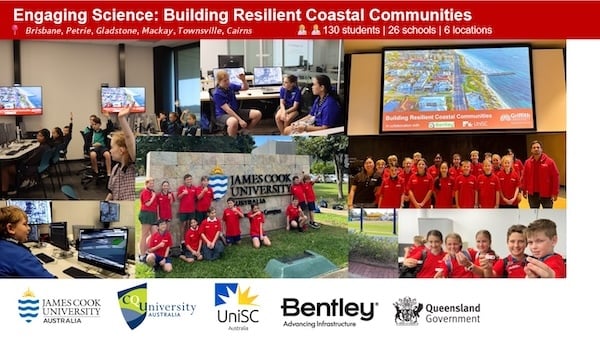
Introducing design and infrastructure software to the next generation insures future designers joining the workforce. Image source Irfaan Peerun. Click to enlarge image.
Recognizing Where It All Begins
Solving challenges like workforce shortages, sustainability targets, and digital transformation starts long before a graduate’s first day on the job. Bentley’s Educator of the Year Award recognizes that need. It starts with educators who are willing to rethink how infrastructure is taught — and who are comfortable letting students explore, experiment, and sometimes fail along the way.
For Peerun, the recognition is a validation of an approach built around curiosity, hands-on experience, and relevance. Whether working with university students on campus-scale digital twins or introducing younger learners to infrastructure through immersive visualization, his programs are designed to make engineering tangible and meaningful.
As infrastructure continues to evolve, so too must the way it is taught. By celebrating educators who are already pushing that evolution forward, Bentley’s Educator of the Year Award underscores a powerful idea: the future of infrastructure is shaped, first, in the classroom.
FAQ: Educator of the YearWhat is Bentley’s Educator of the Year Award?It’s a Bentley Systems award created to recognize educators who measurably improve infrastructure education through innovative teaching, strong student engagement, and effective use of modern engineering methods and tools. Who won Bentley’s first Educator of the Year Award?Dr. Irfaan Peerun, a civil engineering lecturer at Griffith University (Australia), was named Bentley’s inaugural Educator of the Year. Why did Bentley create the Educator of the Year Award?Bentley created the award to spotlight educators shaping the next generation of infrastructure professionals and to encourage collaboration and sharing of teaching approaches across the education community. How does Peerun use digital twins in engineering education?Peerun involves students in building and extending a campus-scale digital twin using Bentley’s iTwin platform, combining models and geospatial information to explore operational use cases beyond design. What kinds of projects do students work on in Peerun’s courses?Students work on modeling and simulation problems such as roads, bridges, and buildings, plus construction sequencing and design communication — often in interdisciplinary teams with open-ended constraints. How does early outreach help infrastructure education?Programs aimed at younger students use familiar tools (games, VR, visualization) to make infrastructure concepts tangible, potentially increasing interest in engineering and improving long-term workforce pipelines. |
|
Educators and students can learn more about Bentley’s education program here. Teachers can find concept-based learning material in Bentley’s new education hub where teachers are sharing curriculum. Watch for this year’s application, coming soon. |
This article was sponsored by Bentley Systems.
***



Share This Post